


¿Por qué falla el mortero en climas cálidos y cómo la hidroxipropilmetilcelulosa (CAS 9004-65-3) lo soluciona?
2026-07-26 17:40Construction in tropical markets across Southeast Asia, South Asia, and the Middle East operates under conditions that expose every weakness in a dry mix mortar formulation. Ambient temperatures above 35 degrees Celsius, direct sun on substrate surfaces that regularly reach 50 to 60 degrees Celsius, low humidity during dry season, and strong afternoon winds that accelerate surface evaporation create a combination of stresses that standard HPMC grades formulated for temperate climates cannot reliably address. The result is mortar that skins over before tiles can be placed, plaster that cracks before the applicator has finished the wall, and render that debonds from facades within the first wet season. These are not application failures. They are formulation failures caused by insufficient water retention under tropical conditions.
What Specific Problems Do Tropical Conditions Create for Mortar
Open Time Too Short for Tile Installation
Standard tile adhesive mortar in temperate climate formulations achieves open time of 20 to 30 minutes at ambient temperatures of 20 to 25 degrees Celsius. The same formulation in Metro Manila, Bangkok, Karachi, or Riyadh at 38 degrees Celsius ambient and 50 degrees Celsius substrate surface temperature loses workable open time in 6 to 10 minutes. Tilers working at normal production pace cannot place, adjust, and press tiles within this compressed window, leading to either rushed application with poor adhesive coverage or discarded mortar batches mixed smaller to beat the skinning time.
Both coping strategies increase project cost without solving the problem. Smaller batches increase mixing labor and material waste from batch end residue. Rushed application produces tile coverage below the 80 percent minimum required for structural bond integrity, creating the debonding failures that generate warranty claims months after project completion.
Plastic Shrinkage Cracking in Render and Plaster
Render and plaster applied to sun-facing walls in tropical climates lose surface moisture by evaporation at rates that can exceed 1.0 kilogram per square meter per hour under direct sun with moderate wind. At this evaporation rate, the surface of a freshly applied render coat dries faster than bleed water can migrate from the interior to replenish surface moisture, generating tensile stress in the plastic mortar that produces map cracking across the surface before the cement has set.
This plastic shrinkage cracking is not caused by insufficient cement content or incorrect sand grading. It is caused by insufficient water retention in the HPMC grade used in the formulation. Standard HPMC grades at dosages adequate for temperate climates do not retain enough water under tropical evaporation rates to prevent surface drying ahead of bleed water migration. The solution is not adding more water to the mix, which reduces final strength and increases total shrinkage. The solution is selecting HPMC for tropical climate mortar with higher viscosity and water retention capacity suited to the evaporation rate the mortar will experience on site.
Inconsistent Workability Between Morning and Afternoon Pours
Construction teams across tropical markets report consistent experience of morning mortar performing well and afternoon mortar of the same formulation and batch performing poorly. The difference is substrate temperature. Morning application to shaded or east-facing walls finds substrate temperatures of 30 to 35 degrees Celsius. Afternoon application to west-facing walls under direct sun finds substrate temperatures of 55 to 65 degrees Celsius. The same HPMC grade that provides 20 minutes open time on a cool morning substrate provides 8 minutes on a hot afternoon substrate.
This inconsistency forces site supervisors to manage application schedules around substrate temperature rather than workforce availability, reducing daily output and increasing labor cost per square meter. Cellulose ether water retention hot weather construction performance that is consistent across the full daily temperature range from morning to afternoon requires HPMC grades specifically selected for thermal stability at elevated substrate temperatures.
What HPMC Grade Solves Tropical Market Performance Problems
Higher Viscosity Grade at Increased Dosage
The direct solution for hot climate mortar performance problems is specifying higher viscosity HPMC grades at the upper end of the recommended dosage range. Tile adhesive formulated for Southeast Asian markets should use HPMC at 60000 to 75000 mps viscosity at dosage of 0.3 to 0.45 percent by weight of dry blend, compared to 40000 mps at 0.2 to 0.3 percent adequate for temperate climates. This higher viscosity and dosage combination retains more water per unit of mortar volume, extending open time to 18 to 25 minutes even at substrate temperatures above 45 degrees Celsius.
Render and plaster for tropical exterior applications should use HPMC at 60000 to 75000 mps at dosage of 0.3 to 0.4 percent, compared to 40000 mps at 0.2 to 0.35 percent for standard European formulations. The stronger water-retaining film formed by higher viscosity HPMC slows surface evaporation sufficiently to prevent plastic shrinkage cracking under direct sun exposure and moderate wind conditions typical of tropical construction sites.
Consider HEMC for Maximum Thermal Stability
For applications in the most demanding tropical conditions, switching from HPMC to Hydroxyethyl Methyl Cellulose provides additional performance benefit. HEMC maintains its water retention film more stably at elevated temperatures than standard HPMC due to the hydroxyethyl substitution that improves thermal stability of the cellulose ether film. For exterior render and EIFS base coat applied under direct sun in markets where substrate temperatures regularly exceed 50 degrees Celsius, HEMC at equivalent viscosity provides measurably longer open time and better crack resistance than HPMC at the same dosage.
| Application | Temperate Grade | Tropical Grade | Dosage Increase |
|---|---|---|---|
| Standard tile adhesive | 40000 mps | 60000-75000 mps | 0.2-0.3% to 0.3-0.45% |
| Exterior render | 40000-60000 mps | 60000-75000 mps | 0.2-0.35% to 0.3-0.4% |
| Wall putty | 15000-30000 mps | 30000-40000 mps | 0.2-0.3% to 0.25-0.4% |
| Gypsum plaster | 20000-40000 mps | 30000-50000 mps | 0.2-0.4% to 0.3-0.5% |
What to Look for in an HPMC Supplier for Tropical Markets
Tropical construction markets require HPMC supply with two specific capabilities beyond standard product quality. First, the supplier must stock and supply high viscosity grades of 60000 to 75000 mps consistently, not just as special order items that require extended lead time. Second, the supplier must provide technical support for tropical climate formulation development, including grade recommendation based on the specific ambient and substrate temperature conditions of the target market, not just a standard product specification that was developed for European or North American construction conditions.
Why EastChem
EastChem is a trusted HPMC supplier for Southeast Asia construction providing Hydroxypropyl Methyl Cellulose CAS 9004-65-3 in high viscosity grades specifically suited for tropical climate mortar formulations to dry mix mortar manufacturers, construction chemical producers, and building material distributors across Southeast Asia, South Asia, and the Middle East. Our manufacturing is certified under ISO 9001, ISO 14001, and ISO 45001 systems, and our products meet REACH compliance requirements for European market access.
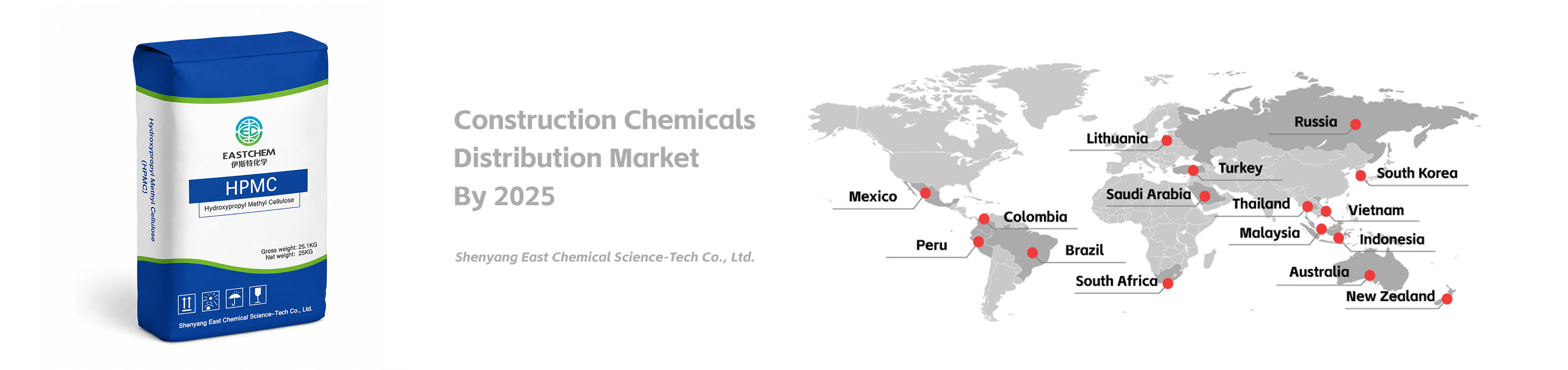
We supply HPMC in standard and high viscosity grades from 15000 to 75000 mps with viscosity consistency within 10 percent of stated grade across all production batches. Technical support for tropical climate formulation development including grade selection, dosage optimization, and open time testing guidance is provided as standard to qualified buyers.
Contact EastChem today to request a free sample of HPMC for tropical climate mortar, technical data sheet, or pricing for your Southeast Asian or South Asian market formulation requirements.
FAQ?
What HPMC viscosity grade prevents open time failure in tile adhesive above 40°C?
For high-temperature substrates, use 60000–75000 mPa·s HPMC at 0.3–0.45% dosage to maintain sufficient open time. Lower viscosity grades may lose water retention and reduce installation performance.
¿Por qué se agrieta el revoque en las paredes orientadas al oeste por la tarde?
La luz solar directa puede elevar la temperatura de las paredes a55–65°C, acelerando la evaporación del agua y provocando grietas por contracción. HPMC de mayor viscosidad (60000–75000 mPa·s) mejora la retención de agua y reduce el riesgo de agrietamiento en climas cálidos.
¿Debería modificarse la dosis de HPMC entre las estaciones de verano e invierno?
Sí. Las condiciones cálidas y secas requierenmayor dosis de HPMCPara compensar la evaporación más rápida, mientras que en condiciones más frías o húmedas se puede reducir la dosificación. El ajuste estacional ayuda a mantener un rendimiento constante del mortero.